Care & Style Guide

How to Make a Good Bag Last

Practical advice on caring for leather, choosing the right silhouette, and building a relationship with a bag worth keeping.

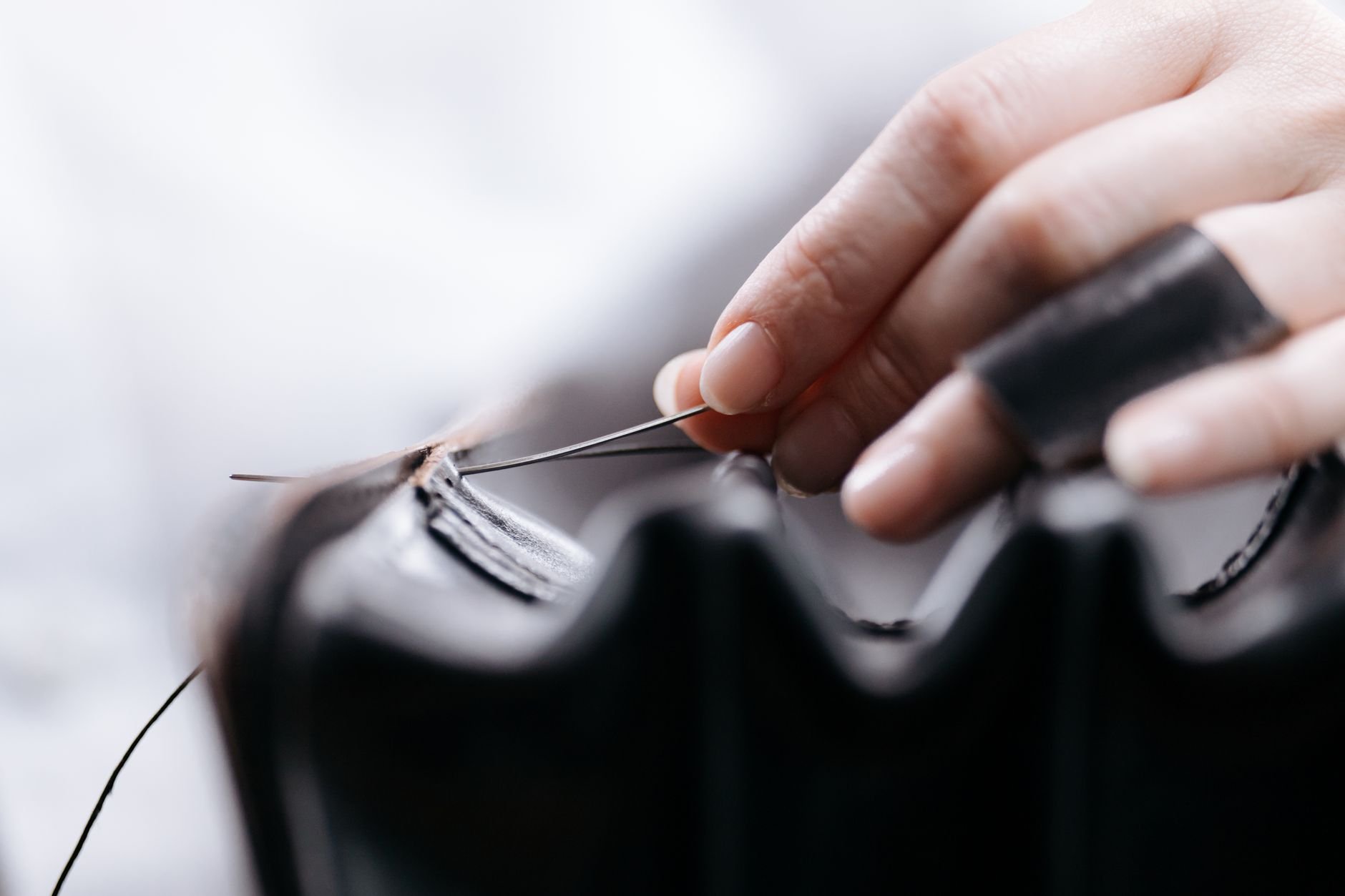
Close-up of a hand stitching leather, showcasing intricate craftsmanship and precision.

The stitching that separates a bag you keep from one you replace.

Care Guide

How to make a good bag last

A well-made bag, properly cared for, doesn't depreciate the way fast fashion does. It deepens. The leather develops a patina. The hardware softens from polished to lived-in. The bag becomes yours in a way a new one never quite is. What follows is what we know — accumulated from caring about bags the same way our customers do.

01

Daily habits that make the difference

The biggest factor in how long a bag lasts has nothing to do with how expensive it was. It has to do with how it's treated when you're not thinking about it.

Avoid placing your bag directly on the floor whenever you can — it degrades the base and base corners faster than almost anything else. Use the hook at restaurants. Set it on a chair. Keep a small flat base shaper in structured bags to prevent sagging while stored.

Leather breathes. Keep it away from plastic bags in storage. A cotton dust bag, breathable fabric, or even a clean pillowcase is better than a sealed plastic container. Moisture trapped against leather encourages mold and causes the material to break down from the inside.

Rotate your bags. A bag carried every day without rest develops wear at the same pressure points repeatedly. Giving it a day off each week extends the hardware and handle life considerably.

02

Cleaning leather the right way

Wipe down smooth leather bags regularly with a soft, slightly damp cloth — this removes the surface oils and dirt that, if left, can darken the leather unevenly or cause cracking over time.

For conditioning: use a leather conditioner appropriate to the specific leather type once or twice a year. Test on a hidden spot first. Many conditioners will darken or slightly change the sheen of lighter leathers. If in doubt, less is more.

Do not use household cleaners, alcohol wipes, or anything with acetone on smooth leather. For suede and nubuck, use a dedicated suede brush — soft rubber or brass bristles — and brush in one direction to raise the nap. Avoid water entirely on suede unless you have a suede protector applied first.

For bags with fabric linings: turn them out if possible and shake out debris. For a deeper clean, a small amount of mild soap on a damp cloth, dabbed (not rubbed), then allowed to dry completely before closing.

03

Hardware and zippers

Zipper failure is one of the most common reasons women replace a bag before the leather has worn out. Most zipper issues are preventable.

Keep zipper teeth clean and dry. If a zipper starts to stick, a small amount of beeswax or a dedicated zipper lubricant (not petroleum-based) applied along the teeth with the zipper open will usually restore it. Avoid forcing a stuck zipper — this bends the slider and makes the problem permanent.

Tarnishing on metal hardware is largely a function of skin contact and humidity. Wipe hardware down with a dry cloth after handling. For gold-toned brass hardware that has already tarnished, a jeweler's cloth can restore some shine — but be careful not to polish coated or lacquered hardware with anything abrasive, as it removes the finish.

Magnetic closures can, over time, demagnetize. Keep them away from other strong magnets. If a magnetic closure weakens significantly, a bag repair professional can often replace the magnet core.

04

Long-term storage

If you're storing a bag for more than a few weeks, stuff it. Use acid-free tissue paper, a bag pillow, or clean bubble wrap to maintain the shape. Never use newspaper — the ink transfers.

Store bags upright when possible. Bags stored on their sides for extended periods can develop a permanent lean or crease in the leather.

Keep out of direct sunlight. UV exposure fades leather and fabric, and it's cumulative. Even a bag on a shelf by a window will lighten over months in a way that's uneven and difficult to reverse.

For very long storage, condition the leather first, allow it to fully absorb, then store in a breathable cloth bag in a cool, dry, dark location. Check on it every few months.

05

Choosing the right silhouette for your life

The best bag for you isn't the most beautiful one — it's the one that fits how you actually move through your day. Before choosing based on aesthetics alone, think honestly about what you carry, where you go, and how you carry it.

Structured bags — satchels, top-handle bags, boxy crossbodies — project polish and hold their shape over time. They're ideal if you commute, go to meetings, or want a bag that photographs well and looks intentional. The trade-off: they can feel rigid and are harder to get in and out of quickly.

Soft, slouchy bags — hobos, bucket bags, relaxed totes — are easier to live with. They accommodate more, flex as your load changes, and often feel more relaxed and personal. The trade-off: they require a little more structure from their owner to stay organized.

Size is almost always underestimated. If you carry a wallet, a phone, keys, a small water bottle, and a few extras — test the bag with those things in it before committing. A bag that fits all of that without becoming a rectangle is a bag you'll reach for every day.

06

Thinking about a bag as an investment

A bag that costs three times as much but lasts ten times as long isn't expensive — it's efficient. The math on quality is usually better than it first appears, but only if you choose wisely.

Classic shapes — the structured satchel, the clean crossbody, the refined tote — outlast trends. A bag you buy for a season is never a good investment. A bag in a shape that's been carried for decades and will continue to be is.

Neutral tones do more work. Black, camel, cognac, deep navy — these go with more, get pulled out more, and age with more grace than a statement color chosen for a trend that passes.

Look at the hardware. Coated hardware chips; solid brass ages. Look at the stitching. Even, tight, consistent stitching means the person who made it cared. Look at the zipper brand — YKK and RiRi are indicators of a manufacturer that doesn't cut corners on the functional details.

At 75-6, this is the lens we use. Not 'is it beautiful?' — but 'is it worth carrying for years?' Because that's what your bag is for.

Style Guide

Choosing the right silhouette for how you actually live

Every silhouette has a job it does well. The question is not which bag is "best" — it's which one fits the shape of your day. Here's how to think about the main categories.

01

The Tote

The workhorse silhouette. A structured tote in a neutral leather — camel, tan, cognac, black — goes from the office to the weekend without effort. The key is structure: a tote that collapses under the weight of its contents stops looking polished and starts looking like a grocery bag. Choose one with a reinforced base.

Best for: Commuting, travel, days that run long

02

The Shoulder Bag

The most versatile mid-size option. Worn across the body on a long strap for weekends; on the shoulder for evenings; in hand by the top handle for meetings. A shoulder bag in a medium, understated shape works with almost everything. Avoid logos that fight with the rest of what you're wearing.

Best for: All-day carry, travel, work-to-evening

03

The Structured Satchel

Formal enough to carry into any professional environment, interesting enough not to read as corporate. A structured satchel with clean hardware and a top handle is the bag you reach for when you want to feel deliberate. It works with a suit, a dress, tailored trousers, and even a well-put-together casual outfit.

Best for: Professional settings, formal occasions, sharp casual

04

The Crossbody

The bag that lets you use your hands. When you're traveling, at a market, running between meetings, or anywhere that two free hands matter, a well-made crossbody in a size that fits your essentials is invaluable. Look for adjustable straps, secure closures, and enough interior pockets to keep things findable.

Best for: Travel, events, active days, errands

75-6 LLC

Find a bag worth caring for.

Browse the 75-6 LLC collection — chosen for quality construction and materials that age well.

Shop the Collection